Findability: New and Better SEO?
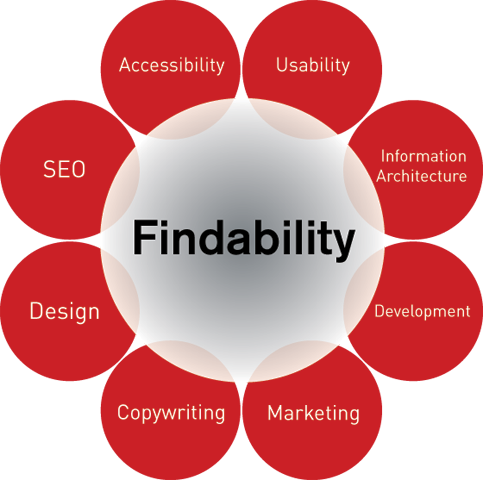
Findability is a term that has become a buzzword for a while due to a book called Building Findable Websites by Aarron Walter.
I’m always on the lookout for new concepts and innovation.
Thus I made a little time to find out more about findability, its meaning, roots, who coined the term and when.
The first thing I found out was that neither Aarron Walter nor renowned usability expert Jakob Nielsen used the term findability first.
The History and Definition of Findability
It appears that the term findability and most notably ambient findability was coined in 2002 by Peter Morville.
He even published a book of the same title. First things first though. Let me explain what findability is about.
Website findability sounds like the new and better SEO (Search Engine Optimization).
It’s like on-site SEO without the bad rep of the SEO industry when you adopt the definition from Building Findable Websites.
To summarize it – Aarron Walter explains that building websites for findability encompasses not only search engine optimization but a holistic approach with usability and Web standards in mind.
That’s a concept I can fully support. One thing that Mr. Walter attempts to tell us though is:
SEO vs Findability
SEO is bad insufficient by itself. Instead according to Walter findability is including:
- social networking
- viral marketing
- and more”.
See also the author’s comment below the post. Could it be all so simple?
This is a good move from a marketing perspective as almost nobody likes SEO of course.
The SEO acronym is a red flag in itself or at least is perceived by the majority as such.
When we go back to what Peter Morville wrote in 2002 we discover that findability and SEO are not contradictory but basically twin brothers. He acknowledges how
SEO contributes to a website’s findability along with usability and other important aspects of information architecture.
Now that might be the problem of it – not generating enough hype – so that Aarron Walter took a more aggressive approach.
Also Walter reduced findability to websites built with web standards while Morville’s definition extends to the real world.
Morville uses examples like looking for long term parking or restrooms at an airport which strike home very convincingly.
Jakob Nielsen used the term in 2006 for the first time as far as I can see.
Nielsen also limited it to website findability without denouncing SEO though.
Can We Just Rename the Ugly Duckling and Call it Swan Instead?
Am I angry at Aarron Walter for being explicit about SEO?
No, I’m glad! I am glad someone makes a strong point on renaming the “whole problem”.
In this sense I took the wrong approach with attempting to redefine SEO and having to deal with its never ending reputation problem.
Using another, better term is the by far more effective way of redefining something.
Sadly the renaming technique is mostly used by political think tanks to manipulate the public usually.
In this case the outcome of the manipulation is a positive one. People will acknowledge best practices and put them to use.
I don’t care how you do call it! Use the term SEO, findability or like myself probably SEO 2 as long as we have the same goals.
Our goals match while the methods do just partly.
Walter’s findability refers as part of web development only to the on-site or on-page factors of SEO.
This Kind of Findability is Not Enough
Fixing websites is not enough to be found, especially in the social Web environment, but the two disciplines match to some extent.
The single most positive aspect of website findability is the teaching aspect: Findability teaches
- designers
- Web developers
- information architects
what they’ve condescendingly ignored for years: making websites findable.
Most of time I am the garbage man throughout the years of all these lazy
- designers
- web developers
- information architects
and had to fix crap websites for years. I’m sick and tired of it. I want to do the real thing, the content the more advanced fun stuff not just fixing other people’s blunders.
Please clean up your websites yourself guys and don’t rely on the poor Mexican migrant worker with a sombrero to do it.
That said I still prefer the approach of Peter Norville.
So do not only read Aarron Walter’s book but also, or at first Norvilles “Ambient Findability”.
Btw.: Building Findable Websites only covers the on-site SEO basics.
When you really want to do web design for findability you need to read more than just this book.
Make sure to also peruse my blog here and check out some of the most important findability resources below.
Findablity Resources
This list of findability resources encompasses articles spanning over two decades.
Some of them deal with findability in real life not just on the Web. I update this list regularly.
- What is Findability? | Interaction Design Foundation (IxDF)
- The Age of Findability – Boxes and Arrows
- Ambient Findability
- Digital Web Magazine – Ambient Findability
- O’Reilly Media | Ambient Findability
- findability.org – by Peter Morville
- A List Apart: Articles: Ambient Findability: Findability Hacks
- Use Old Words When Writing for Findability – Jakob Nielsen
- A List Apart: Articles: Findability, Orphan of the Web Design Industry
- Building Findable Websites: Web Standards, SEO, and Beyond
- Findability Bliss Through Web Standards | An Event Apart
- Findability and Exploration: the future of search by Stijn Debrouwere
- ‘Findability’ Will Make or Break Your Online Business | WIRED
- Findability v. Discoverability
- Low Findability and Discoverability: Four Testing Methods to Identify the Causes
- Improving Findability | ITS Web Strategy
- The Beginner’s Guide to Website Taxonomy
- How to Adjust—and Measure—Your Content Strategy for Google’s SGE
From now on please refer to me as a findability expert!
Maybe this way I can outsmart the people who denounce search engine optimization.
Just kidding. Call me what you want, as long as you don’t mistake SEO for SPAM.
Also note how true holistic findability is about making your message findable no matter where it resides.
It’s not just about Google or your website or your favorite social media outlets.
You need to be findable wherever your potential audience is.

I appreciate the post and mention of the book. I’d like to point out that I’ve not ever stated that SEO is a bad thing as your quote above might suggest to some. The goal of my book is to get people to think beyond keywords to take a holistic approach to how they engage their audience through content delivered with standards-compliant markup. I use the term findability because the way we connect with people extends beyond search to include social networking, viral marketing, and more. As my diagram illustrates (shown above), SEO is an important part of the Web industry, and is one part of the domain if findability.
Thanks for sharing your thoughts.
[…] ist uns auch nicht fremd. Aber was versteckt sich hinter der kreativen Wortschöpfung Faindability? Finden wir es heraus … szu=’http%3A%2F%2Fwww.devtimes.de%2F2008%2F05%2F05%2Fbuzzwordticker-findability%2F’; […]
While we’re on the subject of books that will forever change your approach to web design, I might add Steve Krug’s “Don’t Make Me Think”.
IMHO it’s the granddaddy of all usability/optimization/ROI books. And it’s funny as all get out to boot.
I don’t understand why some many blog post have no date assigned to them?
Anyway, cheers from Berlin :)
Thanks for the shout-out. And here I was thinking that I invented the term “findability.” :) I have not read the book, but I do agree that findability is a more holistic approach. And the term “SEO” does make people uncomfortable. I tend to use the terms interchangeably, but I think there is a difference. And while I do not think SEO is bad, as you point out , SEO 2.0 is an important in findability strategy. And that is a very good thing.
This post is one of the reasons I like reading your blog Tad – well researched!
Regarding “findability” – I wonder if soon we shall have a new breed of FE’s? (Findability Experts) who are basically SEM’s changing their names…
What I do find odd is that although SEO has its own sphere, Paid search doesnt – it cant fall into conventional marketing, and is a huge competititor of AND compliment to SEO.
I think the term ‘findability’ has a major advantage in being semantically rich. None of the acronyms SEO, SEM, PPC, aso bear any meaning to the uninitiated. So, my guess is that you’ll have a better chance of getting your message through if you use findability instead of SEO.
Your wheel of findability reminds me of the layered visualization of the webpage that is found in Jesse James Garret’s ‘The Elements of User Experience’ pdf example here.
[…] Learn more about Findability on http://seo2.0.onreact.com […]
Good list of factors. Findability implies being able to find what you are looking for as the result of a search…..providing the answer to a question. The information industry has been using the term for several years…..
Once again : Great Post Mister !
You have the ability to put things in perspective,
and to be honest with you, i feel findability fits what our work is all about, putting things together and making it visible.
it simply makes sense.
I like the fact that findability includes usability.
I tend to bore people about “what a waste it is driving traffic to your website if they can’t use it or you can’t convert them somehow”, so I like having a term that includes at least part of what I’m trying to achieve.
Plus, SEO just sounds a bit sneaky and underhand to me!
[…] SEO 2.0 has an interesting post on the concept of findability. Aarron Walter: Website findability is the new and better SEO so to say or, on-site SEO without the bad rep of the SEO industry if you adopt the definition from Building Findable Websites. […]
[…] findability and web standards can be achieved with the same means when it comes to coding. Thus I collected a […]
[…] lo anteriormente expuesto nos conduce al término “Findability (Encontrabilidad)” aplicable dentro de la Web tanto a los buscadores como a las personas, […]
I’ve always looked at SEO and marketing as a hobby but I would never use seo on a site I felt doesn’t bring users a good or useful experience. The bounce rate would just make the seo efforts a big waste of time. I do agree that creating and designing new concepts and innovations should always be kept in mind. The internet is still young and it’s exciting to see whats coming next.
[…] to find the information they are seeking within a particular website. I’ve discovered a movement exists in the Internet marketing community that is advancing the concept of findabilty as the next […]
I agree. I don’t see any difference between what folks are calling ‘findability’ and good SEO practice. Too many black hat SEO companies have given the entire concept of SEO a bad name so much so that many of it’s best practices need to be re-branded as ‘findability’.